The Journal
Law & Society
Legal insights, awareness and perspectives on law and social matters.
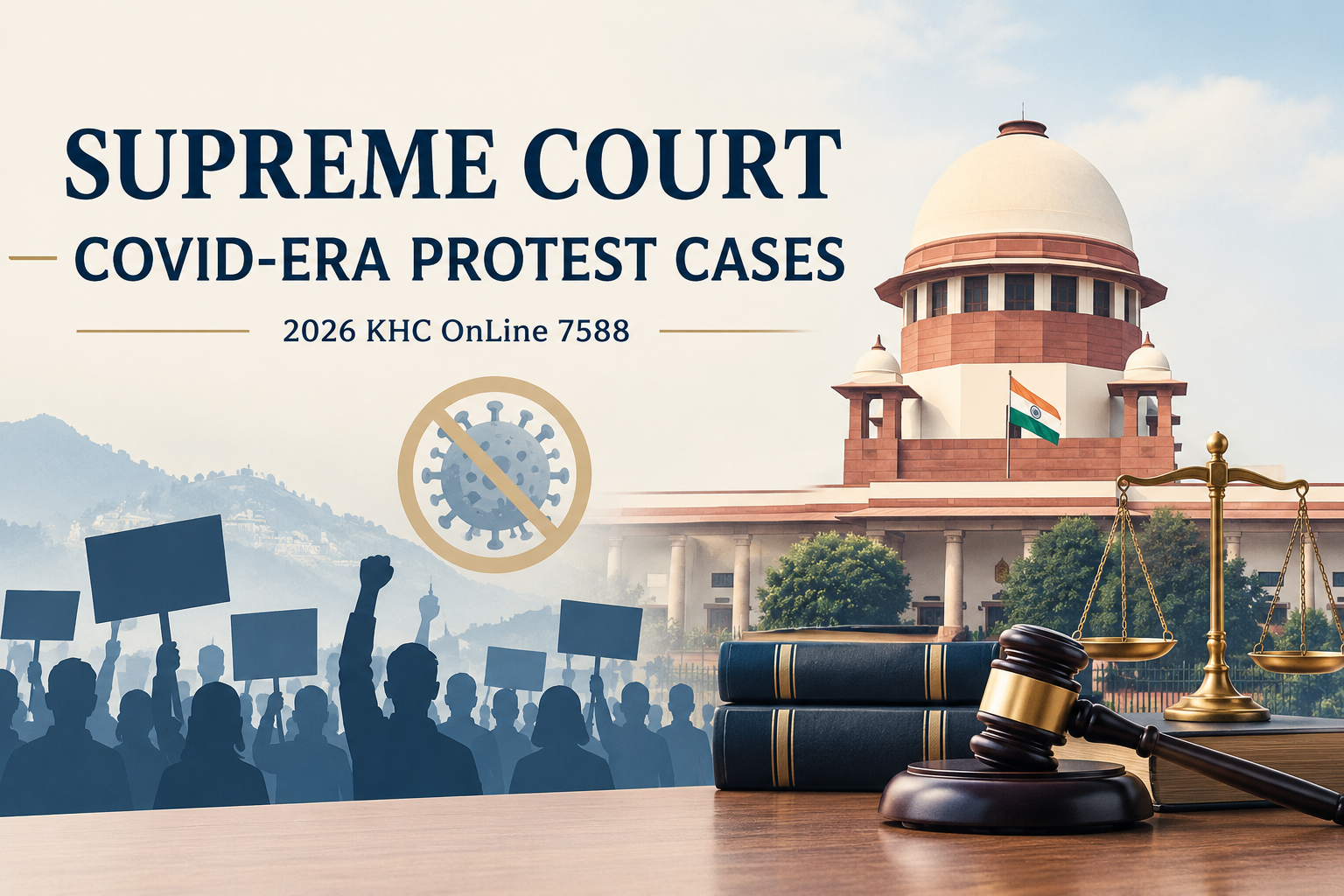
Supreme Court Permits Withdrawal of COVID-19 Protest Cases Against Sitting and Former MPs and MLAs in Himachal Pradesh
The Supreme Court of India, in State of Himachal Pradesh v. Court on Its Own Motion (2026 KHC OnLine 7588), permitted the withdrawal of prosecution in criminal cases involving sitting and former MPs and MLAs arising from protests and public demonstrations during the COVID-19 pandemic. The Court observed that the allegations did not disclose grave or heinous offences and that there was no indication that the accused were habitual or hardened criminals. Considering the exceptional circumstances prevailing during the pandemic, the Court held that continuing such prosecutions would neither serve the interests of criminal justice nor advance public interest, while consuming valuable judicial time that could be devoted to more serious cases. The decision highlights the importance of assessing the nature of the alleged offences and the public interest involved when considering the withdrawal of prosecution against elected representatives.
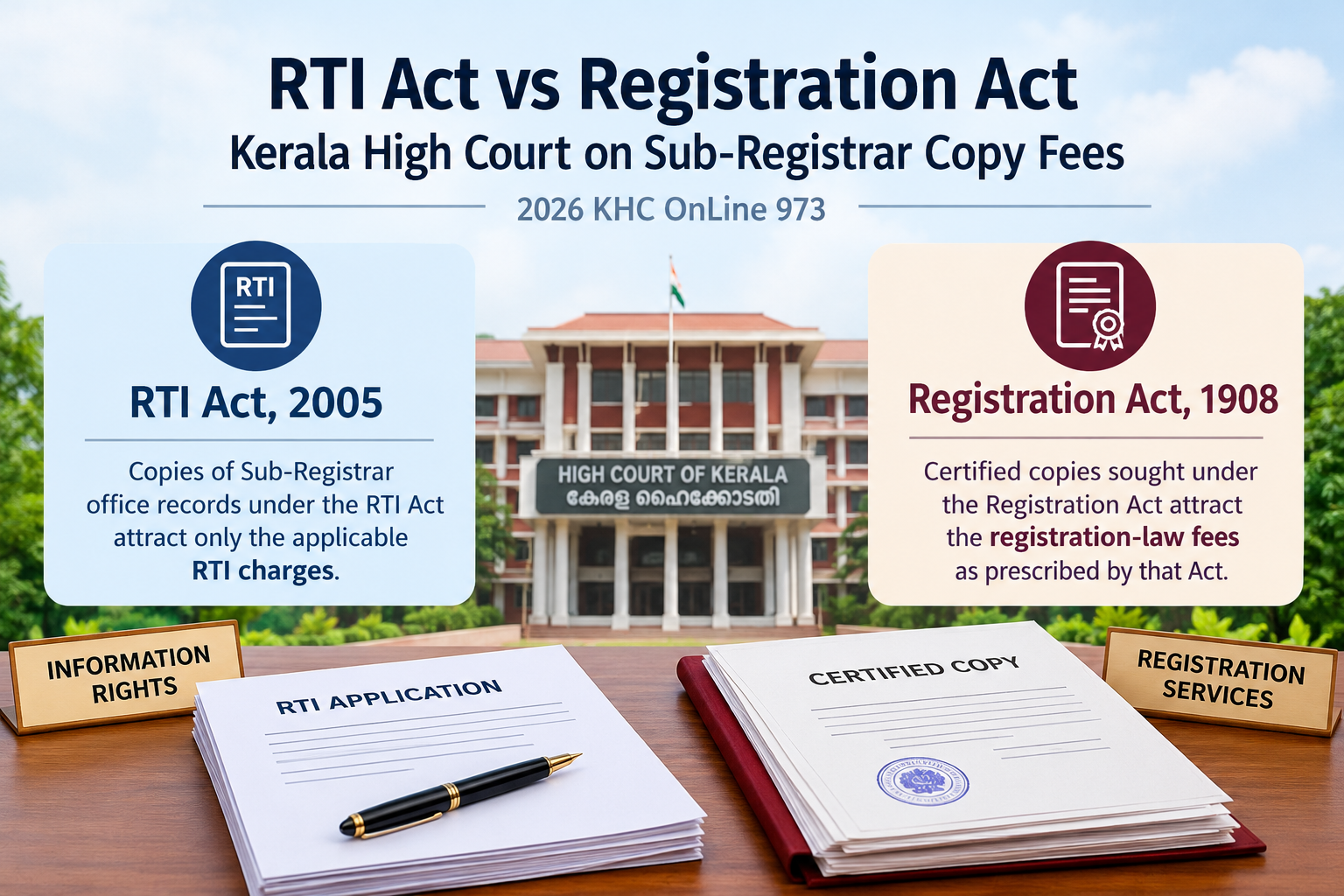
RTI Act and Certified Copies from Sub-Registrar Offices
The Kerala High Court, in 2026 KHC OnLine 973, addresses the distinction between fees payable for obtaining information under the Right to Information Act, 2005, and charges prescribed for obtaining certified copies under the Registration Act, 1908. The decision highlights that an applicant seeking copies of Sub-Registrar office records under the RTI Act is required to pay the applicable RTI charges, whereas registration-law fees apply when certified copies are sought under the procedure prescribed by that Act. The ruling is significant for citizens, property owners and advocates seeking access to public records, as it emphasises the importance of distinguishing between the two statutory procedures.
Land Classification, Possession and Reassessment of Basic Land Tax
The judgment concerns the petitioners’ request for change of land classification/nature and reassessment of land tax under the Kerala Land Tax Act, 1961. The Court considered whether the request could be processed in the absence of clarity regarding possession of the property.
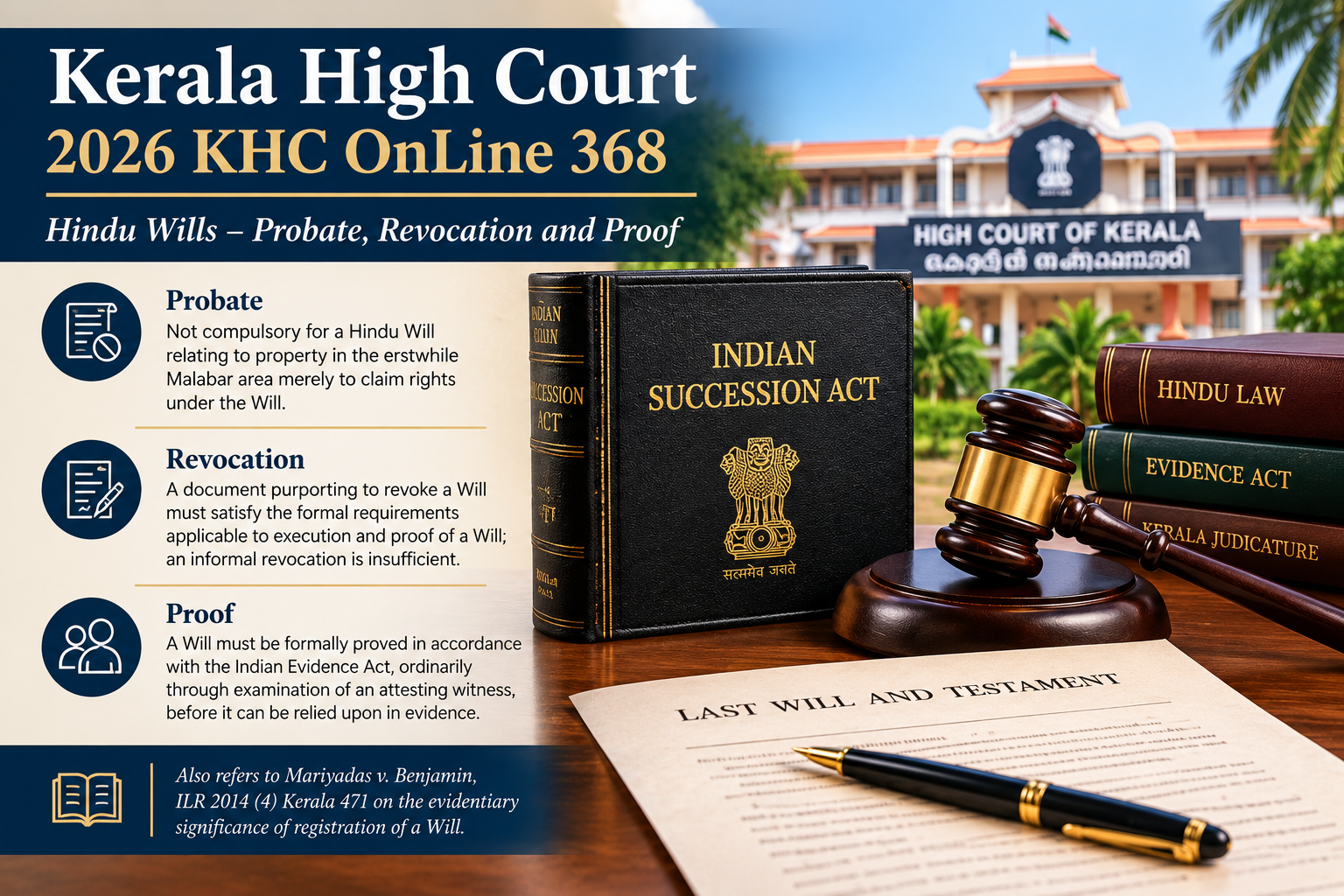
Hindu wills and proof/revocation of wills.
The 2026 KHC OnLine 368 judgment is the one concerning proof of a Hindu Will, revocation of a Will, and the position regarding probate in the erstwhile Malabar area. The publicly indexed material confirms those propositions
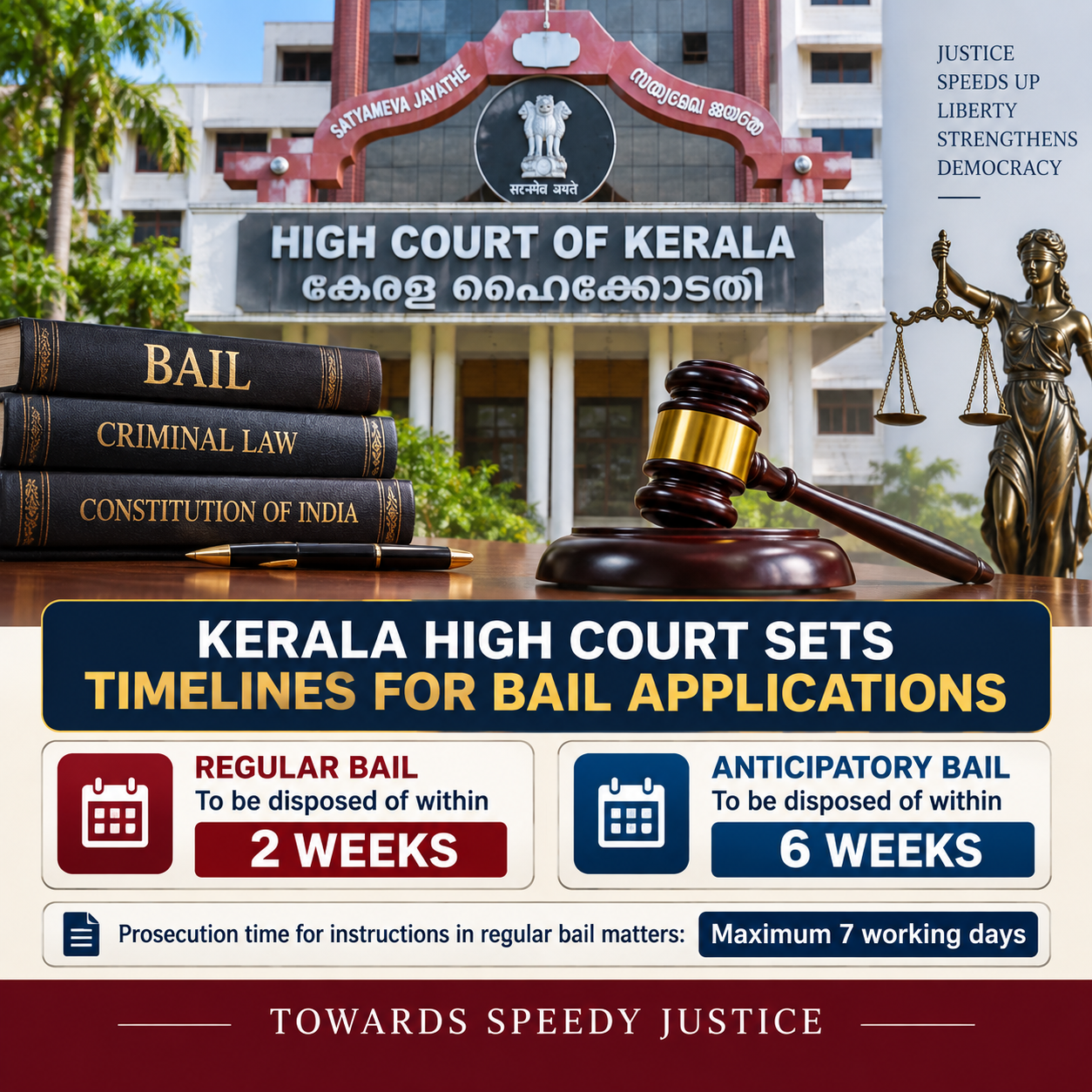
Kerala High Court Sets Time Limits for Bail Applications: A Significant Step Towards Timely Justice
Kerala High Court sets timelines for bail applications: regular bail pleas within two weeks and anticipatory bail applications within six weeks, aiming to reduce delays and ensure timely consideration of personal liberty.
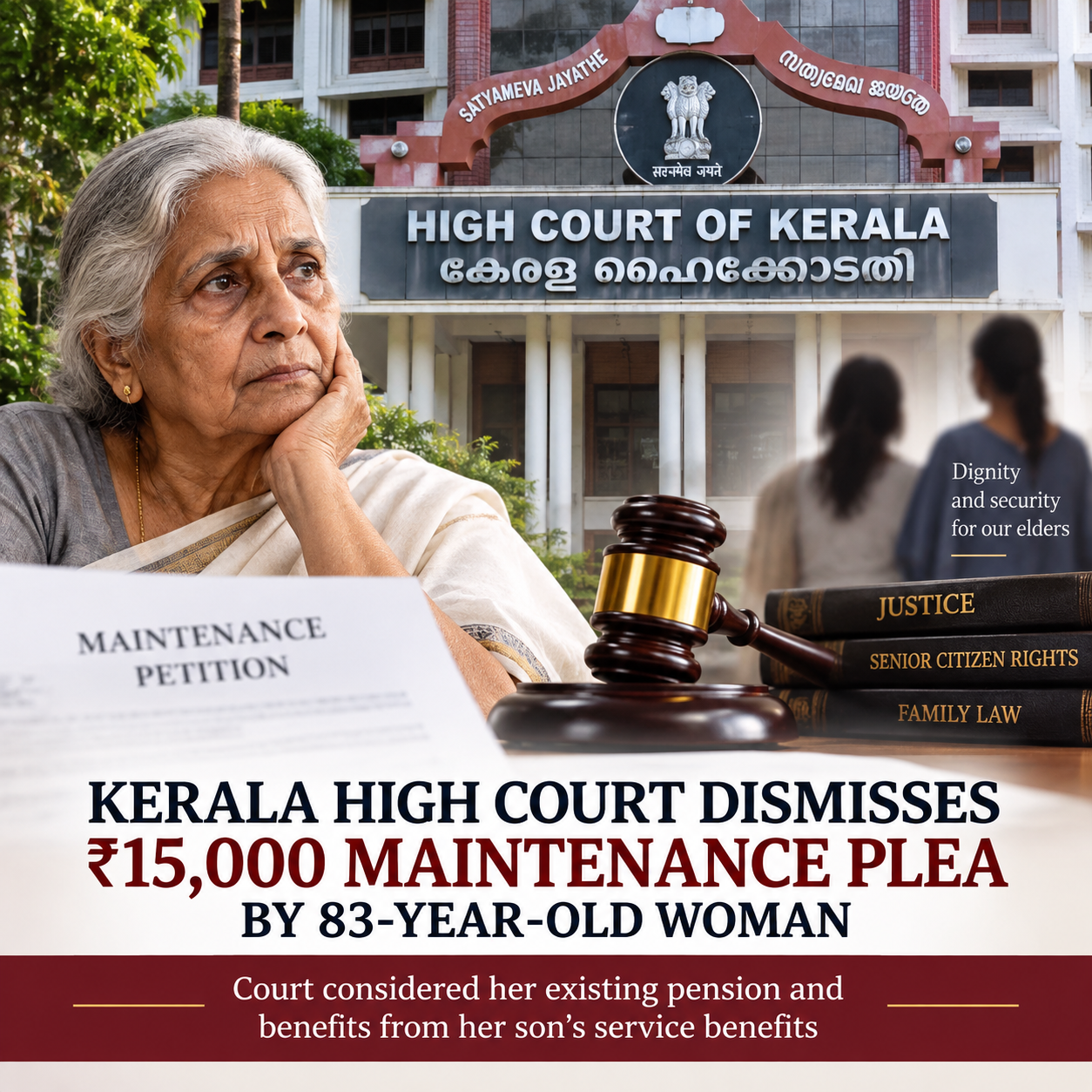
Kerala High Court Dismisses ₹15,000 Monthly Maintenance Plea by 83-Year-Old Woman: A Legal Perspective
Kerala High Court dismisses an 83-year-old woman's ₹15,000 monthly maintenance plea, considering her existing pension and service-related benefits. The case highlights how courts assess financial need and available resources in senior citizen maintenance claims.
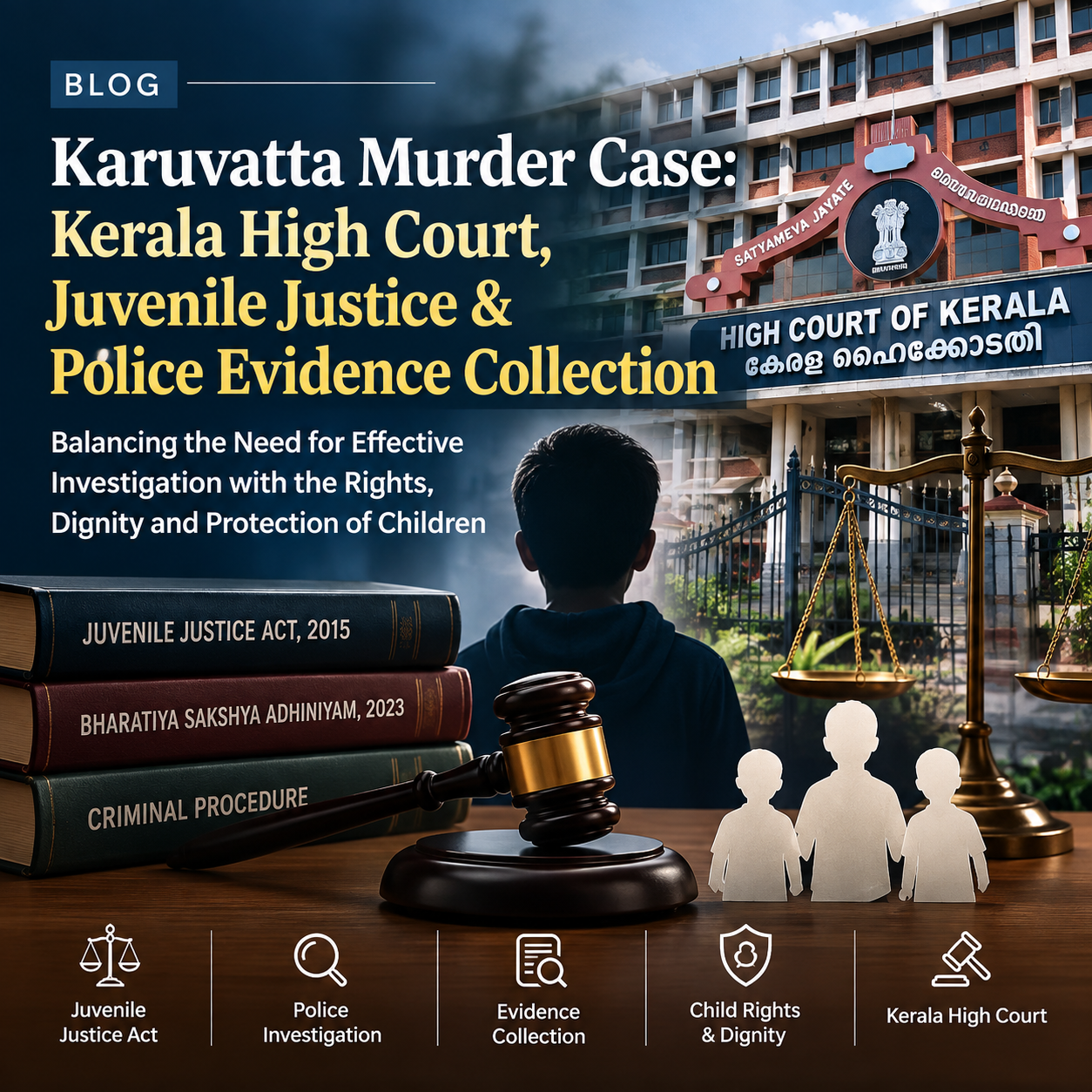
Karuvatta Murder Case: Juvenile Justice, Police Custody and the Limits of Evidence Collection
The Kerala High Court’s intervention in the Karuvatta murder case raises important questions on juvenile justice, police investigation and evidence collection. The Court stayed the Juvenile Justice Board’s order permitting the escorted movement of three children in conflict with law for evidence recovery, bringing into focus the balance between effective criminal investigation and the statutory protection, dignity and welfare of children under the Juvenile Justice Act.
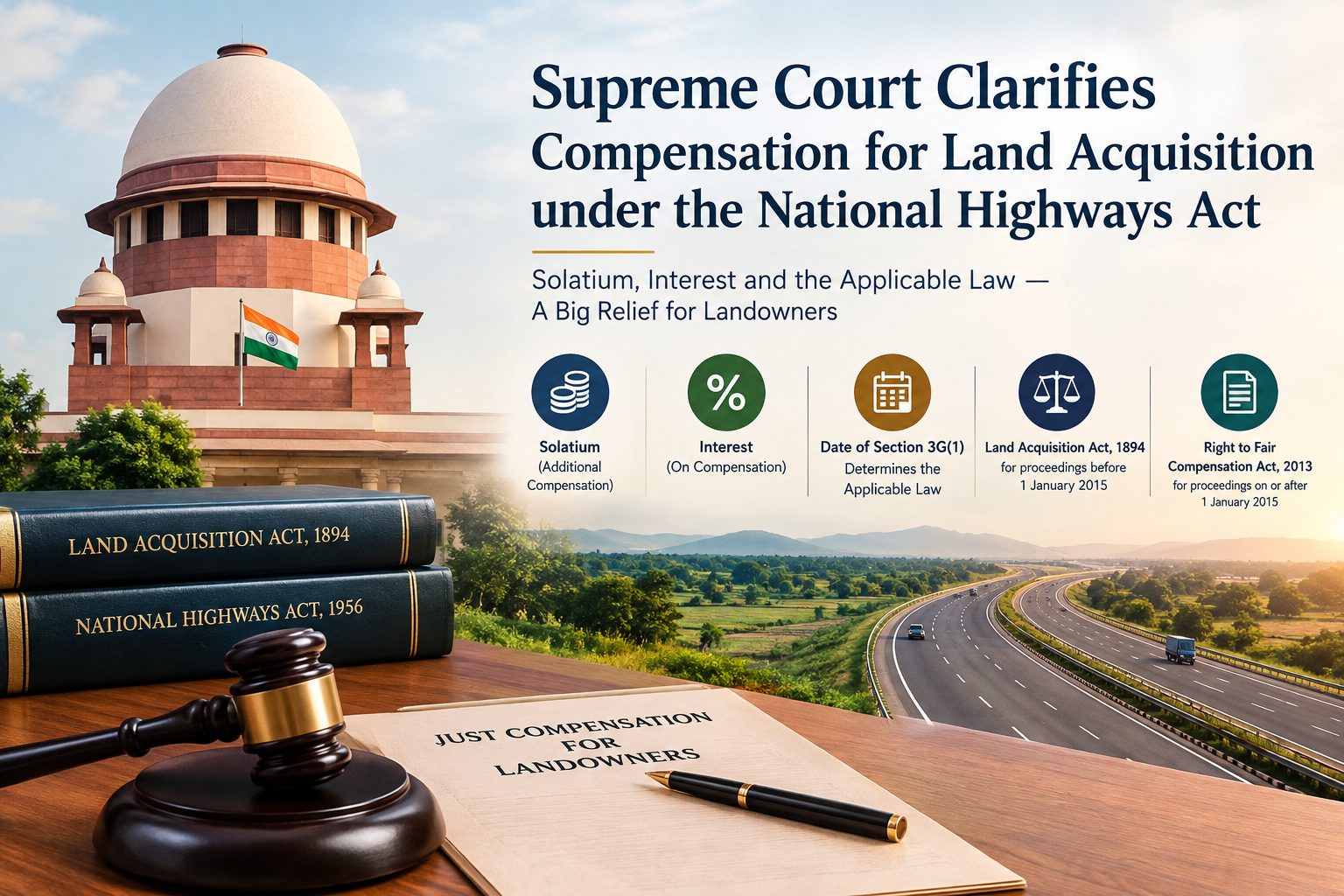
Supreme Court Clarifies Compensation Regime for Land Acquisitions under the National Highways Act: A Significant Relief for Landowners
The Supreme Court has delivered a landmark judgment clarifying the compensation framework applicable to land acquisitions under the National Highways Act, 1956. The Court held that landowners are entitled to solatium, interest, and interest on solatium, while also determining that the date of compensation determination under Section 3G(1) is the decisive factor in identifying the applicable legal regime. This ruling brings much-needed clarity to longstanding disputes concerning acquisitions made before and after the commencement of the Right to Fair Compensation and Transparency in Land Acquisition, Rehabilitation and Resettlement Act, 2013, and is expected to have far-reaching implications for landowners, acquiring authorities, and pending compensation claims across India.